Use of turbochargers in crankcase ventilation of hydrogen combustion engines
With growing interest in alternative drive technologies, hydrogen combustion engines are increasingly becoming the focus of research and development. Compared to battery-electric mobility, they offer the advantage of fast refuelling and established drive technology—the combustion engine—but with hydrogen as a clean energy source. Crankcase ventilation poses a particular technical challenge. Turbo compressors are increasingly being used here, offering an effective and low-emission solution.
With growing interest in alternative drive technologies, hydrogen combustion engines are increasingly becoming the focus of research and development. Compared to battery-electric mobility, they offer the advantage of fast refueling and established drive technology—the combustion engine—but with hydrogen as a clean energy source. Crankcase ventilation poses a particular technical challenge. Turbo compressors are increasingly being used here, offering an effective and low-emission solution.
As in conventional gasoline engines, blow-by gases are produced in hydrogen engines: during combustion, some of the fuel gas passes the piston rings and enters the crankcase. These gases contain hydrogen, nitrogen, and lubricating oil residues. Since hydrogen is highly diffusive and highly flammable, these gases place special demands on the sealing and ventilation of the crankcase. Conventional solutions for crankcase ventilation reach their limits here—especially when it comes to returning these gases for post-combustion. A particular risk here is the possible deflagration of the gas mixture in the crankcase, which can lead to flash fires from the crankcase ventilation and must be avoided.
Turbo compressors offer a way to actively extract blow-by gases from the crankcase and return them to the intake tract under controlled conditions. The targeted creation of negative pressure in the crankcase not only regulates the pressure, but also reduces the risk of uncontrolled hydrogen accumulation. Modern turbo compressors can be speed-controlled so that ventilation is adapted to different operating conditions of the engine.
Another advantage of this solution is improved oil separation. The targeted gas flow allows oil mist to be separated more efficiently by suitable filter systems, which reduces both oil consumption and emissions in the exhaust system. The combination of filter systems and recirculation units thus achieves a virtually closed circuit.
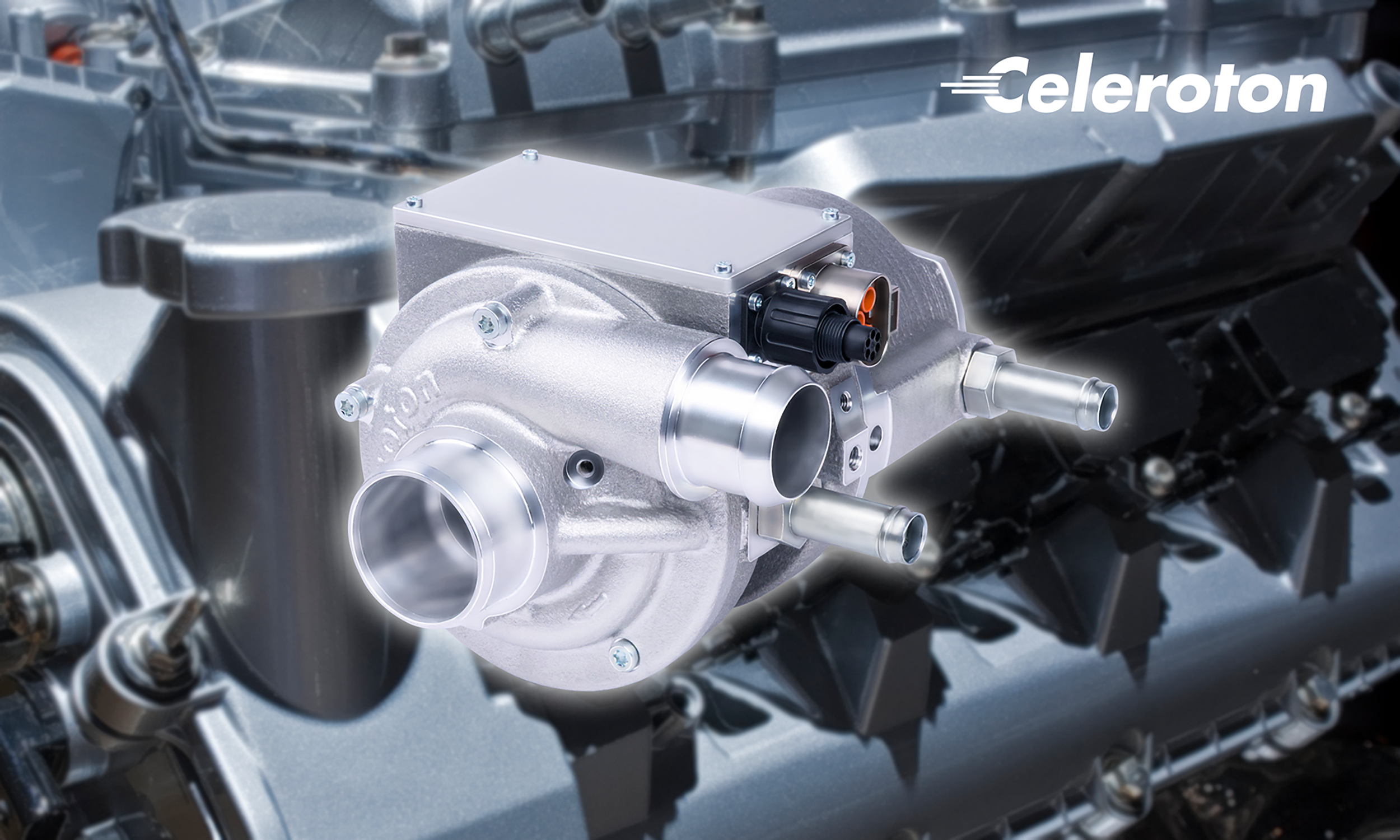
The new CTi-110X Turbo compressor series from Celeroton is particularly suitable for generating the necessary negative pressure in the crankcase. This series, consisting of three types with different aerodynamics, has the required capacity to generate negative pressure at the same air flow rate. The innovative design with integrated control electronics enables operation across the entire characteristic map and can therefore respond to different load conditions, which occur frequently in commercial vehicles, for example.
In summary, the use of turbo compressors in the crankcase ventilation of hydrogen combustion engines offers not only safety-related advantages, but also benefits in terms of emissions and efficiency. This technology could be a decisive factor in bringing hydrogen-powered engines to series production in the automotive sector – especially in applications where long ranges and short refueling times are required.