Evaluate compressed air system energy consumption and savings potential.
Choose your current situation from the three tabs below:
Which compressed air system resembles yours?
Select the configuration that best matches your current compressed air system.
Single Pressure Level System
Entire system operates at one pressure level, usually the highest pressure of all conntected process altough most of the process run on lower pressure.
High & Low Pressure Network
High and low pressure networks already exist.
Low Pressure Air
Conventional blower generating low pressure air.
High pressure after process
A process blows off compressed air at considerable pressure.
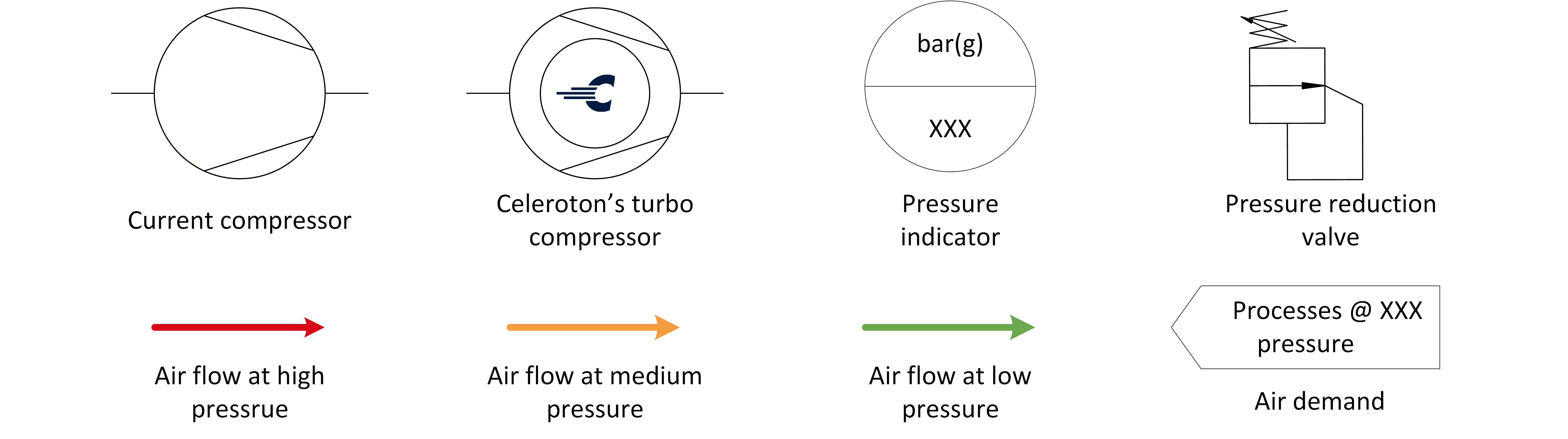
Legend
Single Pressure Level Compressed Air System
Your current compressed air network has one pressure level.
Select the optimization strategy that best matches your application.
Possible Optimization Strategies
Current Layout
Proposed Solution
Generate low pressure air directly where possible
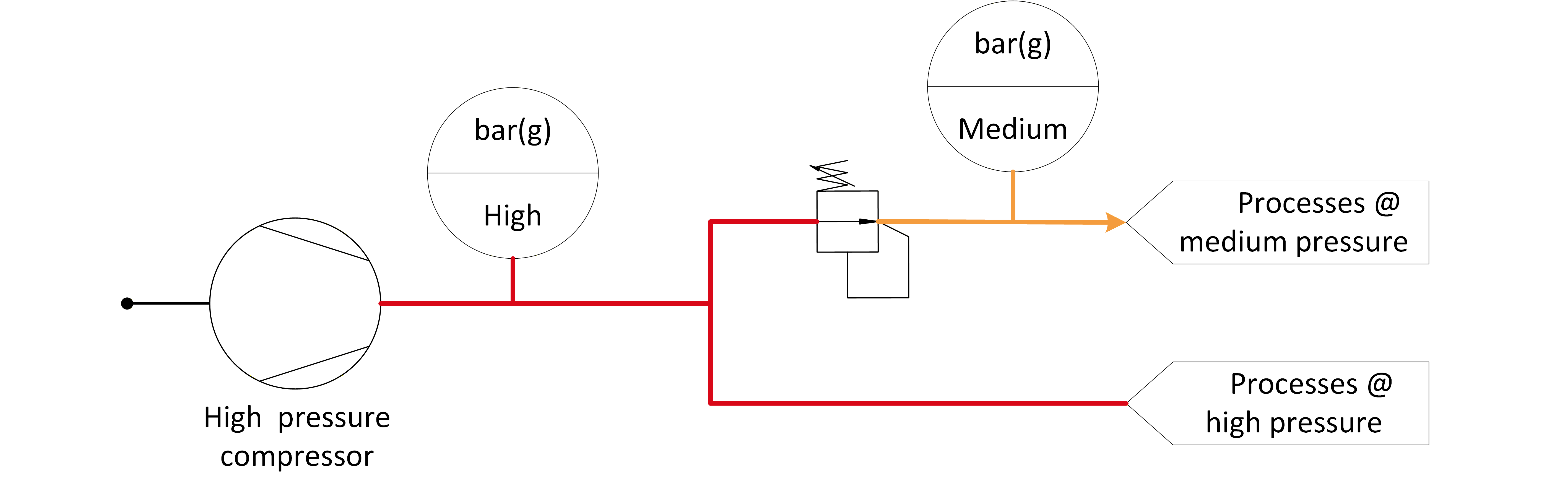
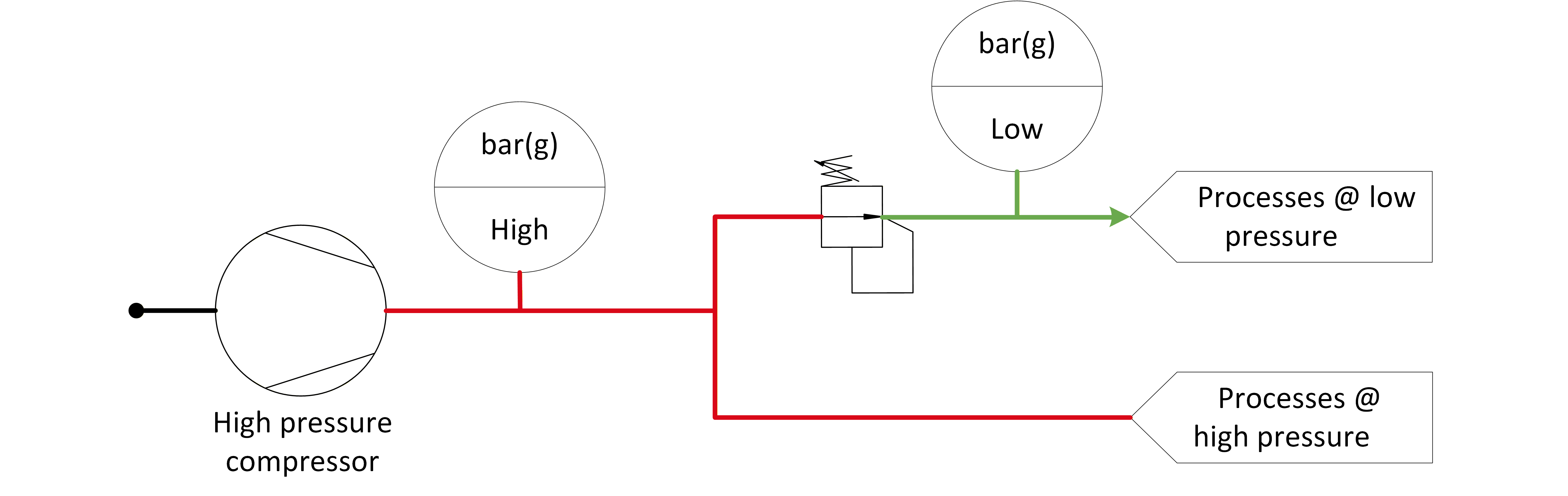
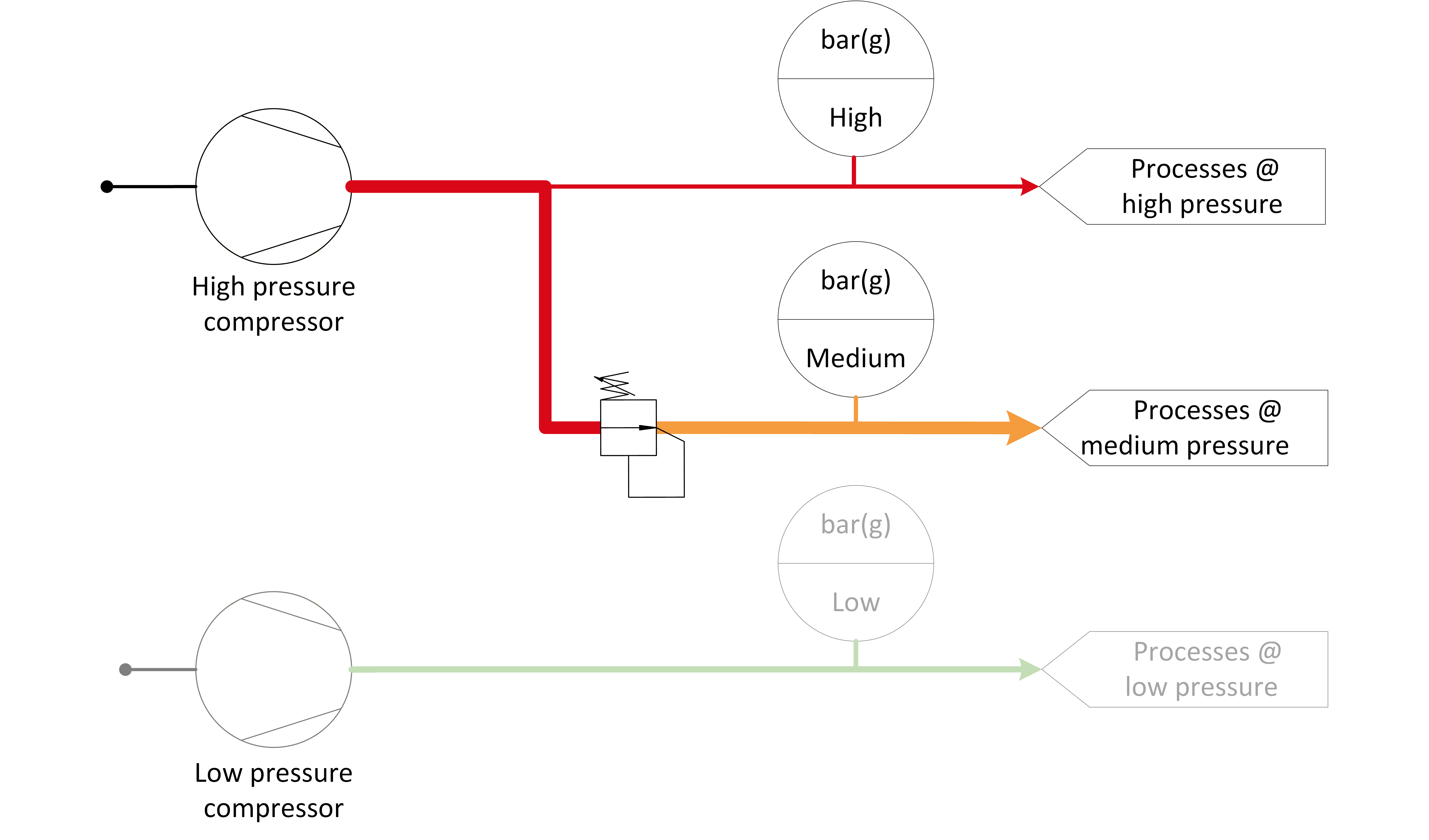
Currently low pressure applications are supplied from the central system. Pressure reduction valves lower the pressure, wasting most of the energy used to compress the air in the central system.
In the proposed solution, low-pressure air is supplied locally by an efficient turbo compressor at the actually required pressure.
Current Layout
Proposed Solution
Lower system pressure, boost pressure where needed
System pressure is currently designed to cover the process with the highest pressure requirement. Most processes require lower pressures, but are still supplied from the central system. A reduction valve reduces the pressure to required levels, wating the energy used to compress the air to the higher pressure.
The optimized layout features a lower pressure in the central system, saving energy for all the compressed air used. Turbo compresssor efficiently boosts pressure to required higher levels where needed.
Legend
Compressed Air System with two pressure levels
Your current compressed air network has two pressure level.
Select the optimization strategy that best matches your application.
Possible Optimization Strategies
Current Layout
Proposed Solution
Efficient Boosting Instead of Pressure Reduction
Curretnly, part of the processes connected to the high pressure system require considerably lower pressure
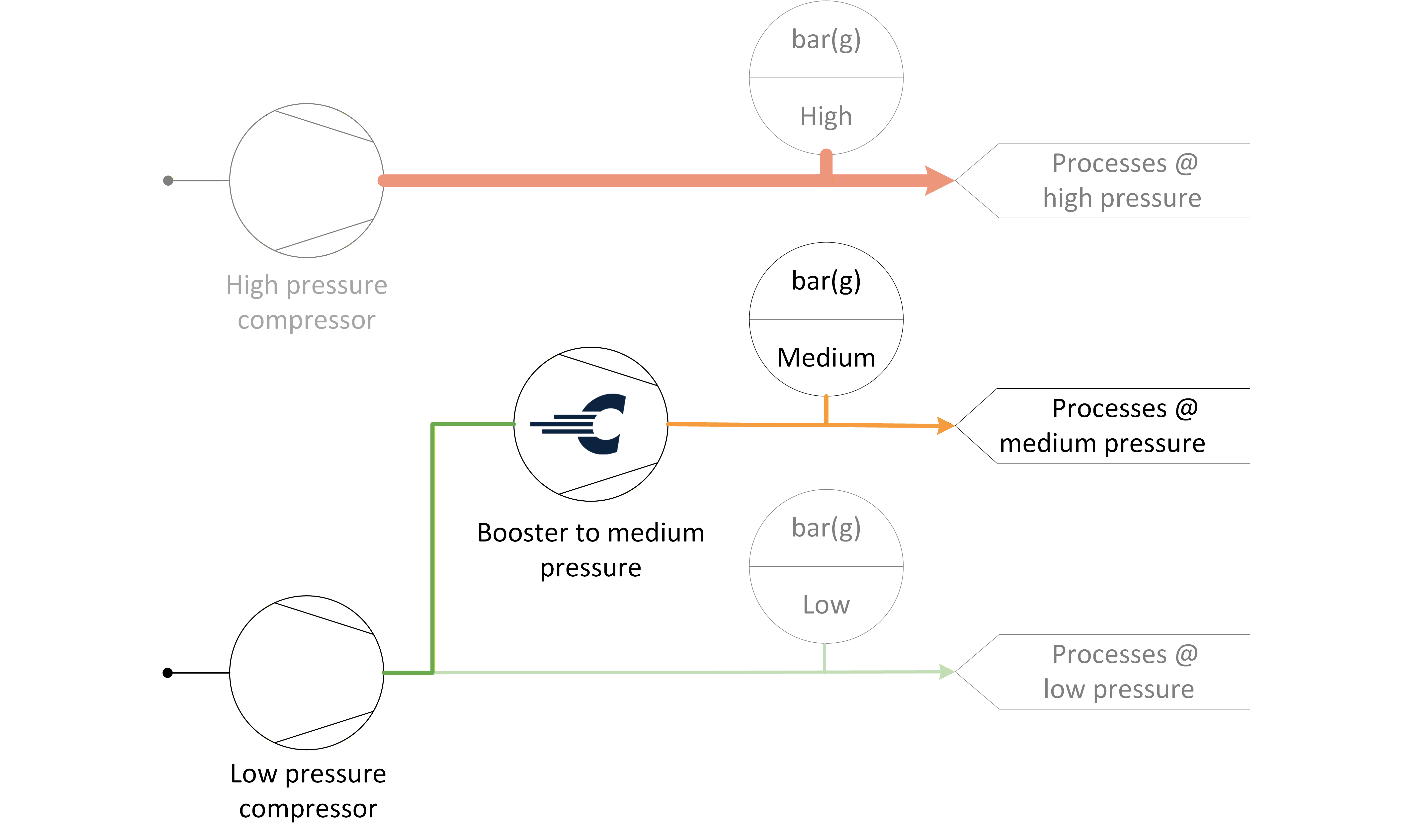
than present in the high pressure system but still higher pressure than the low pressure system provides. Pressure reduction valves reduce the pressure from the high pressure network to the required pressure, wating the energy used to compress the air to the higher pressure.
In the proposed solution, such processes are supplied from the low pressure system. An efficient turbo compressor boosts the pressure to the required level, only compressing the air as much as needed.
Current Layout
Proposed Solution
Efficient Boosting Instead of Pressure Reduction
For the higher pressure system: Only part of the compressed air is really required at the current system pressure. Most processes require pressure between the lower and higher pressure systems.
In the optimized layout, the higher system pressure is lowered to cover medium pressure processes. A Turbo compresssor boosts pressure to higher levels where required.
Legend
Current Layout
Applications running on high pressures but only generating a limited pressure loss (eg. blowing of plastic or glass bottles), air being blown off at still considerable pressure.
Our Solution
The main system pressure is reduced to lower energy demand, while an efficient electric booster lifts the pressure locally for the processes requiring the high pressure.