Ultra-high-speed expanders for energy recovery and process cooling
Celeroton is expanding its turbomachinery portfolio. To date, Celeroton has offered a broad portfolio of gas-bearing turbo compressors in the power range from 100 W to several tens of kilowatts. The turbo compressors are used with a wide variety of gases, including argon, butane, helium, air, propane and hydrogen, and compress the respective working medium to a desired discharge pressure using aerodynamic principles. Compression increases the pressure and temperature of the process medium. Both standard and custom solutions are available.
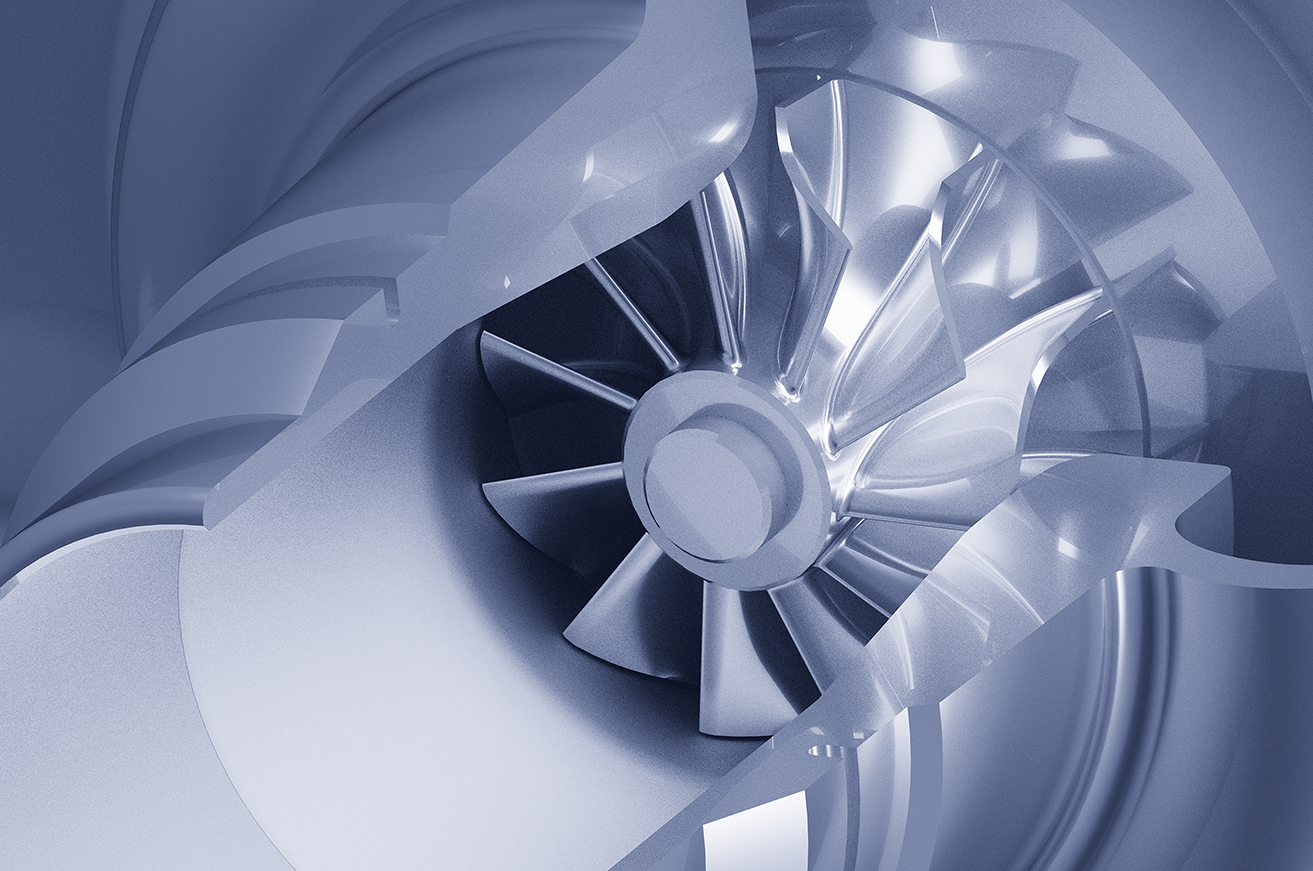
Celeroton ultra-high-speed turbine
In addition to compression solutions, the expanded portfolio now also includes expander solutions. In this case, the energy conversion process is reversed. The energy stored in the process medium is utilized and converted using aerodynamic principles. As energy is extracted, the temperature decreases due to the expansion of the process medium. The development tools and processes established for turbo compressors are used for the design.
Depending on the application, either the recovered energy or the temperature drop is of primary interest:
- The energy can be used mechanically and directly on the shaft to support the drive of a compressor. This is used, for example, in fuel-cell turbomachinery and air-cycle machines.
- Alternatively, energy can be extracted from the process using a generator. This also enables the compressor and turbine to be spatially decoupled. They can optionally be electrically linked, or the expander can be implemented as a stand-alone solution with grid feedback.
- Depending on the specific process, cooling of the process medium during expansion can provide an important benefit, for example in a Reverse Turbo-Brayton (RTB) cryocooler or an air chiller.
Figure 1: Mechanically coupled expander and compressor. Figure 2: Electrically coupled expander and compressor.
Celeroton’s scope does not end with the turbomachine itself. As part of the portfolio expansion to include expanders, the company is also setting objectives for the associated drive converters used in stand-alone solutions. Energy-efficiency criteria are essential for expanders in order to maximize energy yield and have therefore been specifically optimized further. These include, for example, a wide range of supported control methods that enable an optimal combination of generator and converter. Furthermore, options can be provided to shift losses from the generator towards the converter. This is relevant, for example, in cold-air and cryogenic applications, as it allows the resulting losses to be dissipated separately from the expander.
Do you have any questions? Feel free to send us an email or call us.