
Decentralized compressed air and vacuum Exactly where it is needed. And only as much as needed.
- Energy savings and improvement of the total cost of ownership
- Small footprint
- Inherently oil-free

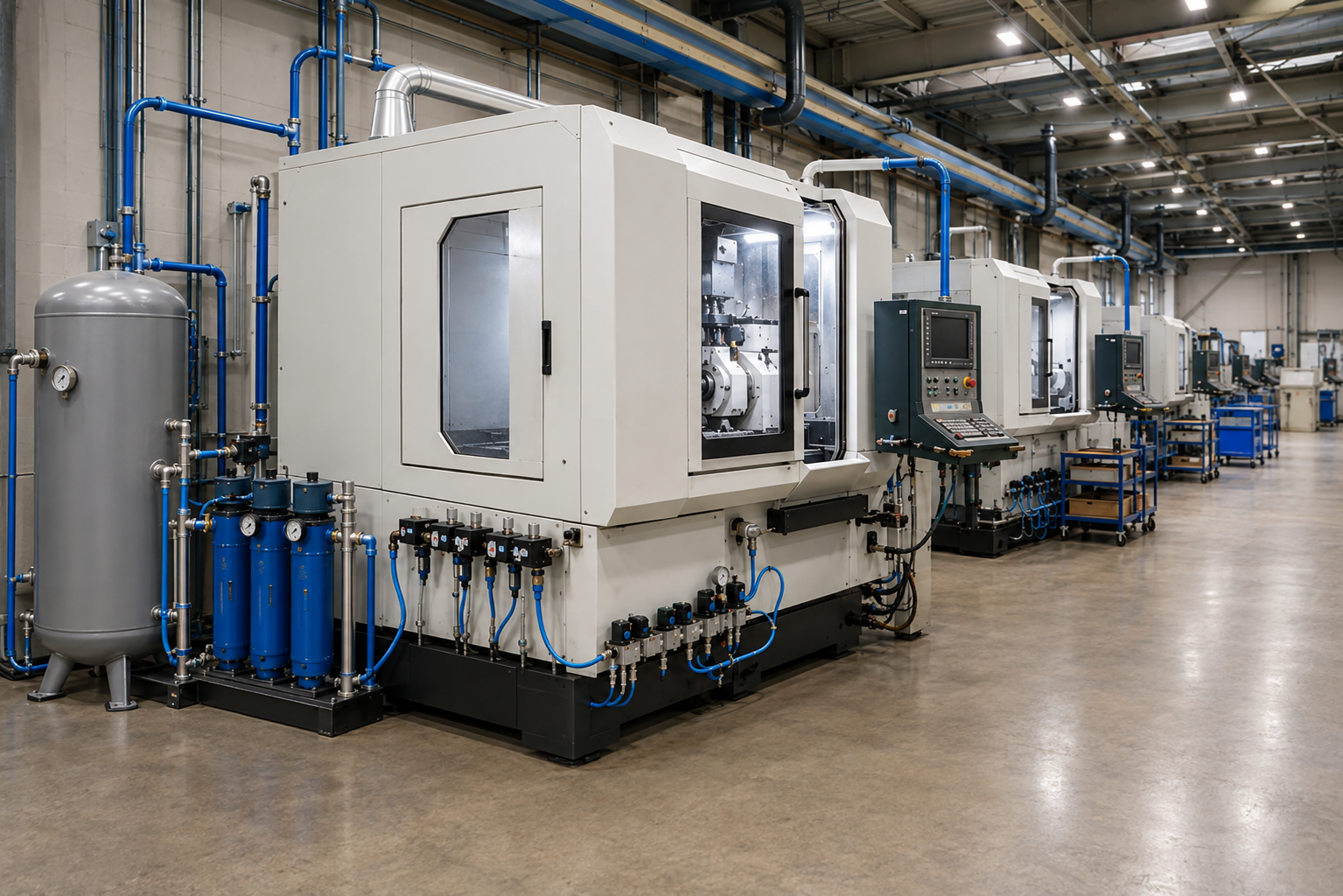
Celeroton turbo compressors generate compressed air and vacuum in a decentralized manner. Minimizing or avoiding the need for central pumps, compressors and distribution pipes eliminate pressure losses and leaks on the fluid transport route. Using decentralized turbo compressors saves energy and cost as only the required pressure (or vacuum) is generated, and no valuable power stored in the compressed air is wasted by pressure reduction valves.
Celeroton turbo compressors are inherently oil-free by design due to their gas bearing technology.
Many industrial processes require compressed air at pressure levels below those provided by the central factory network. Conventionally, this pressure is reduced using valves, dissipating the excess pressure energy. A decentralized, local turbo compressor can avoid this energy waste and supply low-pressure compressed air directly from ambient air where and at the exact pressure it is needed. This approach can avoid energy losses associated with pressure reduction, network leakage and pressure drops.

Different processes within a production line often require different pressure levels. In conventional systems, the central compressor is set to meet the highest pressure demand. In applications where most processes require lower pressure, a decentralised turbo compressor can boost pressure locally for processes that require higher pressure. This enables a reduction of the central network pressure which is one of the main energy saving measures in industry.

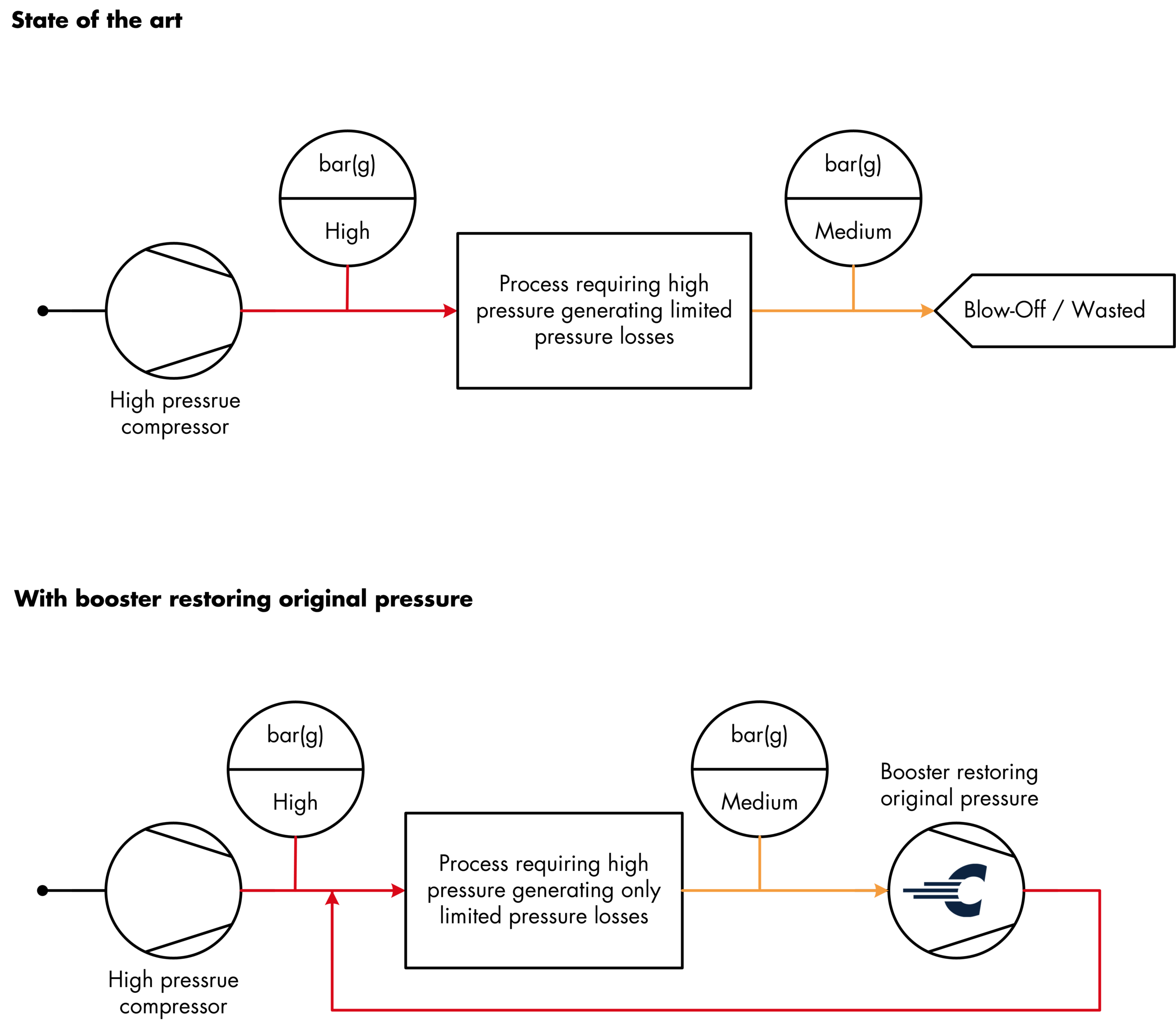
In processes with only a limited pressure drop, outlet air can still contain usable energy. This air is often released to the atmosphere after the process. A turbo compressor can recirculate the outlet air and raise its pressure for reuse at the inlet. This concept can recover part of the energy otherwise lost through blow-off.
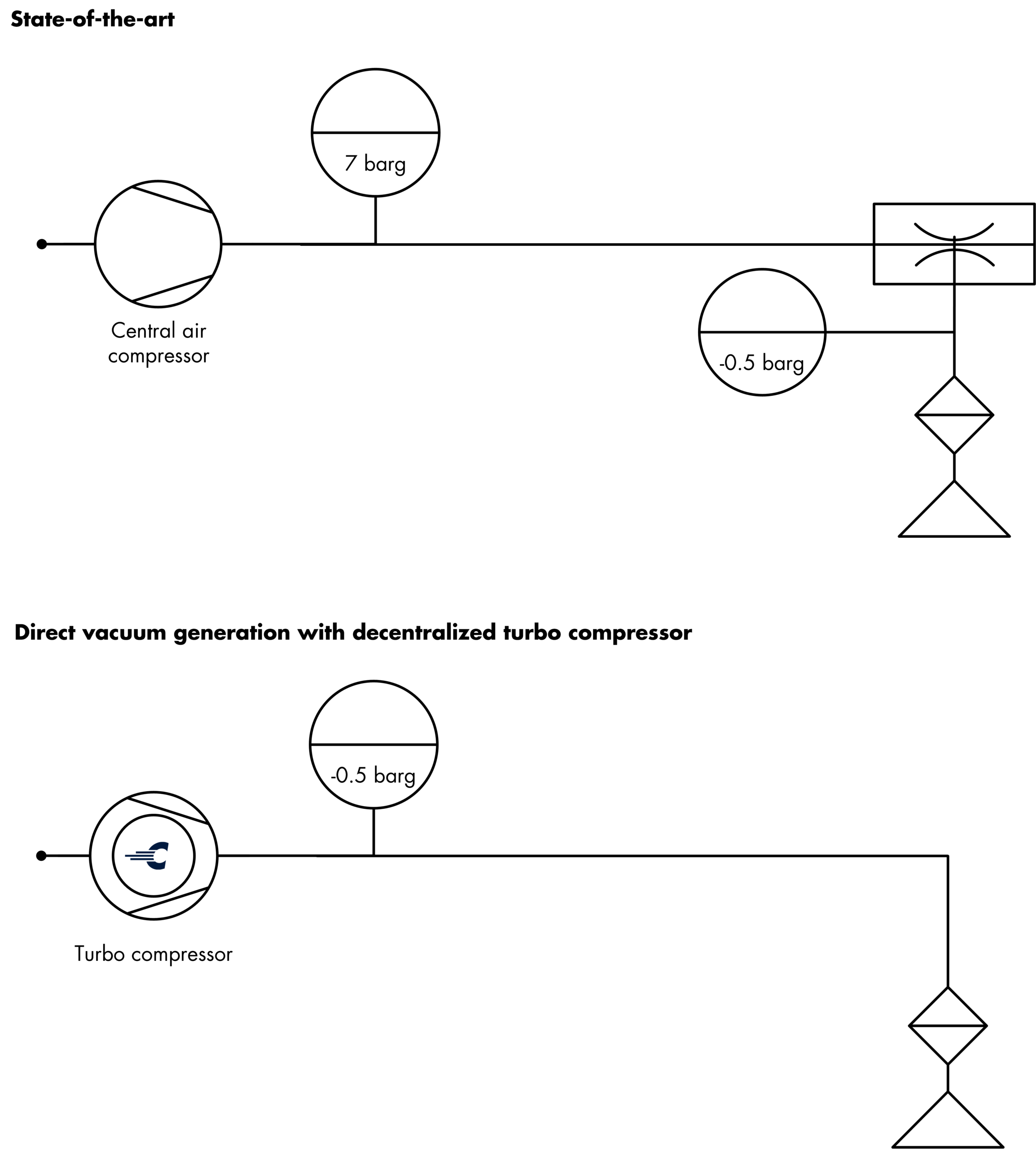
Vacuum grippers are often supplied by ejectors that generate vacuum from pressurised air. This venturi-based approach requires factors more energy than generating vacuum directly. A turbo compressor can generate vacuum directly by connecting its inlet to the vacuum application. Its compact size supports local installation, while speed control can enable vacuum to be switched on and off dynamically.
Read our article on the energy calculator.

